

Table of Contents
Geometry can feel tricky sometimes. Angles, shapes, points, and lines may seem confusing at first. But what if learning them was actually fun? That’s exactly what happens when you try geometry spot games! These are fun learning activities that help students spot shapes, solve puzzles, and understand geometry in a hands-on way.
Whether in a classroom, at home, or online, geometry spot games turn boring lessons into something exciting. There’s no stress—just fun challenges that help players identify geometric patterns, solve problems, and use logic to win.
In this article, we’ll explore what geometry spot games are all about, how they help players learn, and where to find the best ones. Whether you’re a teacher, parent, or student, there’s something here to help you get excited about geometry.
Let’s dive in and discover how spot games can turn geometry into your new favorite subject.
What Are Geometry Spot Games?
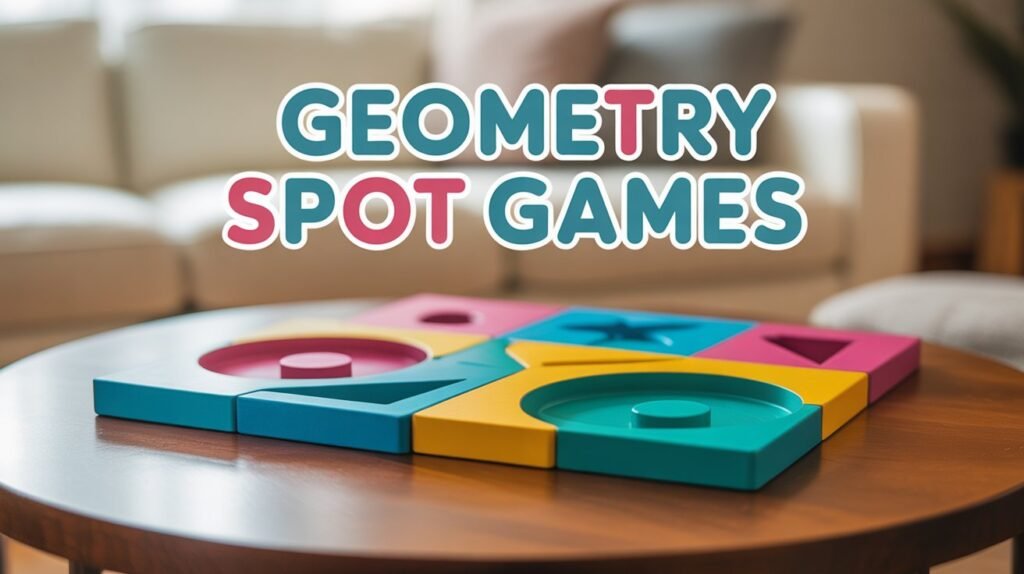
Geometry spot games are learning activities that help you find, name, and work with different shapes and patterns. These games ask players to “spot” or identify certain objects, angles, lines, or figures. You may be asked to find triangles hidden in a picture, match area and perimeter values, or figure out how shapes fit together.
Some games are digital, and others are paper-based or hands-on. You may play them alone or in groups. Best of all, geometry spot games are designed to help you think in a visual way.
No matter what age you are, practicing geometry through fun spotting games helps build skills faster. It’s a natural way to learn without feeling like you’re studying.
Why Spot Games Help You Learn Better
Geometry isn’t only about memorizing formulas. It’s about seeing how parts of a shape come together to form something useful. Spot games help build that visual skill through practice and fun.
Here are a few reasons why geometry spot games are great for learning:
- They boost observation skills. You learn to focus on small details in big pictures.
- They improve logic and reasoning. Many games ask you to figure out the “why” behind a shape.
- They sharpen your memory. Repeating the games helps you recall rules and formulas faster.
- They keep learners engaged. There’s no pressure—only fun challenges to solve.
Spot games turn the “look and guess” process into real learning. That’s why so many teachers use them in classrooms today.
The Most Popular Types of Geometry Spot Games
There are many styles of geometry spot games. Each one targets slightly different skills. Some are perfect for beginners, while others challenge advanced learners. Here are a few game types often used in homes and schools.
Spot the Shape: Players look at a busy scene and try to find hidden shapes like circles, triangles, or squares.
Angle Hunt: Players measure and spot different angles—like right angles, acute angles, or obtuse angles.
Symmetry Games: Players recognize lines of symmetry in images or objects and spot missing parts.
Matching Games: Match 2D or 3D shapes with their names, characteristics, or formulas.
Pattern Games: Identify repeating geometric patterns and figure out what comes next.
Each game builds spatial thinking and helps players improve step by step.
How Teachers Use Geometry Spot Games in Classrooms
Geometry spot games are a teacher’s best friend. Why? Because they make learning interactive, fun, and meaningful.
Here’s how teachers often use spot games:
- Warm-up activities before the main lesson
- Quick review games for test prep
- Centers or stations during group learning
- Homework challenges with digital or printable formats
- Early-finisher choices to keep minds busy
Many geometry spot games are also tied to national curriculum standards. This means students are still meeting learning goals while playing.
Plus, teachers love how these games help students work together and build confidence in math.
Fun Geometry Spot Games You Can Play at Home
You don’t need a textbook to learn geometry. In fact, some of the best spot games happen right at home!
Here are a few fun and easy four-at-home geometry games:
Shape Scavenger Hunt: Look for shapes around the house. Can you find a triangle, square, or cube in your kitchen?
Card Flip Match: Use index cards to write shape names and definitions. Then play memory-matching games with them.
Build It! Challenge: Use toothpicks, blocks, or straws to build 3D shapes like pyramids and cubes.
Guess the Angle: Use a protractor (or app) to guess angles around windows and doors.
Use what you have, keep it simple, and make it fun. Kids and adults enjoy these challenges together.
Geometry Spot Games for Online Learning
Learning from home is easier when you have good tools. That’s why geometry spot games are perfect for digital learning. Many websites, apps, and YouTube videos now offer interactive geometry games that are easy to access on tablets, computers, or phones.
Here are some popular platforms:
- Khan Academy: Free lessons with interactive practice
- Coolmath Games: Tons of puzzle-style geometry games
- ABCya: Great for younger learners
- Math Playground: Mixes geometry with logic puzzles
- Toy Theater: Focus on 2D and 3D shape spotting
These platforms help students stay on track and practice concepts in a colorful, game-like format.
Geometry Spot Games for Different Age Levels
The best thing about geometry spot games is that there’s something for every learner, from preschoolers to high schoolers.
For younger kids (ages 4–7): Games focus on shape names, sorting, and recognizing patterns.
For middle-grade learners (ages 8–12): Games start blending angles, area, perimeter, and symmetry concepts.
For teens (13+): Identify 3D shapes, cross sections, trigonometry basics, and real-world geometry problems.
By adjusting the game level, teachers and parents can offer something exciting and manageable for everyone. The games grow along with the players!
Using Geometry Spot Games to Prepare for Tests
Preparing for a math test can be stressful. But with geometry spot games, studying gets a lot more exciting. Instead of reviewing flashcards, learners focus their attention through discovery and self-correction.
Some preparation-based games include:
- Quiz-style spot games with time limits
- Multiple-choice shape mysteries
- Online escape-room-style puzzles
- Board games with geometry spaces and review questions
Using games as review tools helps kids feel more prepared—and less afraid of math tests!
How Geometry Spot Games Improve Problem Solving Skills
Many people think geometry is all about shapes. But really, it’s about solving problems. Spot games encourage players to look, compare, decide, and act—all steps in problem-solving!
For example, spotting a missing triangle in a pattern or figuring out which line of symmetry is correct requires critical thinking.
Over time, players get better at:
- Thinking ahead
- Trying different approaches
- Spotting errors
- Staying calm under pressure
These skills help not just in math, but also in science, engineering, and everyday life.
Teaching Geometry Through Play-Based Learning
Play-based learning is the idea that children learn best while having fun. This method is especially helpful in math, where anxiety can be high.
Geometry spot games are perfect examples of play-based learning. They offer instant feedback, creative freedom, and the joy of discovery—all while teaching important skills.
This is why early childhood educators often use spot games in preschool and elementary math lessons.
It doesn’t matter if you’re drawing on paper or tapping a screen—if you’re playing with shapes, you’re learning!
Using GeoSpot Apps and Flashcards
Many educational creators now make flashcards and apps called “GeoSpot” or “ShapeSpot” for students learning geometry. These are inspired by the idea of geometry spot games but designed for practice on the go.
Popular features include:
- Tap-to-reveal answers
- Quiz-style challenges
- Matching games
- Colorful shapes and diagrams
- Tracking scores over time
Apps like these are easy to fit into 5-minute review sessions—perfect for busy families and classrooms.
Benefits for Visual Learners
Some learners understand things better when they SEE them. These visual learners benefit the most from geometry spot games, because the games show what shapes look like in action.
Spotting a pattern in a picture teaches more than just reading a rule from a page. Games allow students to “see the math” in real life, making geometry more than just numbers and names.
Games also help players:
- Notice design and layout
- Understand art and architecture
- Follow directions better
- Picture math concepts in their heads
This builds lifelong skills in thinking and creativity.
FAQs
1. What are geometry spot games?
They are learning activities where players identify shapes, angles, and math patterns through playful challenges.
2. Are these games only for young kids?
No! Students of all ages—even adults—can use spot games to practice and improve geometry skills.
3. Can teachers use these games for test prep?
Yes. Spot games keep students engaged while reviewing key concepts like symmetry, perimeter, and area.
4. What equipment do I need to play?
Many games use just paper and pencils. Others may require tablets, apps, or basic school supplies.
5. Are geometry spot games helpful for students with learning differences?
Yes. Because they’re hands-on and visual, they often help students who learn in non-traditional ways.
6. Can I create my own spot games at home?
Definitely! You can build shape scavenger hunts, sorting puzzles, or drawing games using household materials.
Final Thoughts
It doesn’t matter where you are—home, school, or online—geometry spot games help make learning joyful. They turn boring math drills into discovery missions full of color, movement, and fun.
These games help kids absorb real geometry concepts by showing instead of just telling. They build confidence, memory, and problem-solving skills that last far beyond the classroom.